


My son wearing Uncle Shelby’s glasses. (c) 2011 Shelby Hurst Photography
“Happiness is the meaning and the purpose of life, the whole aim and end of human existence.” ~Aristotle
I originally wrote much of this in a reply to an earlier comment from Sharon, but after thinking about this some more, I thought that it would make a good post!
Everyone wants to be happy. Everyone wants to feel fulfilled, loved, and self confident. However, based on the large number of self-help books/ talk-shows, as well as escalating rates of depression and other mental ailments, people seem to be seeking happiness, but many aren’t finding it. This begs the question, is it possible to be truly happy? Is it possible to truly live a happy and fulfilled life?
I not only believe that it is possible to be truly happy, but I truly believe that our purpose in life is to be happy, and truly enjoy life; however, happiness takes work.
“Happiness is not something ready made. It comes from your own actions.”- H.H. the 14th Dalai Lama
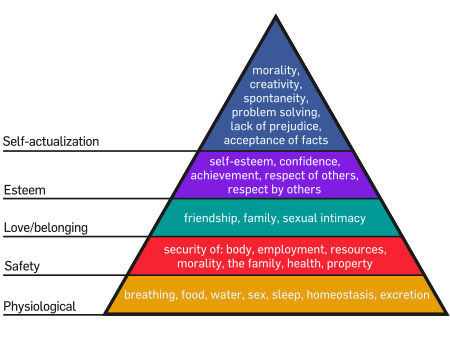
Maslow’s Hierarchy of Needs
If you look at the psychologist Abraham Maslow’s work, especially his hierarchy of needs, it seems to be human nature to continually drive towards and seek out a fulfilled (happy) state of being. According to Maslow, once we have our physiological needs (food, water, sleep, etc.) taken care of, we move onto seeking out and securing safety needs (shelter, security, etc.), then we move onto love and belonging (friends, family, sexual intimacy), then esteem (confidence, achievement, respect to and from others), and finally self-actualization (morality, creativity, and even spiritual maturity). Being truly happy requires fulfilling our external AND internal needs. Therefore, we can have all of our external needs met such as physiological and safety needs, yet if the internal needs aren’t met, we will be unhappy. Since most people today have all of their basic external needs met, it appears that most feelings of unhappiness stem from incomplete or unfulfilled internal needs (love and belonging, esteem, and ultimately self-actualization).
The key to fulfilling our internal needs, is to maturely and confidently evaluate our internal needs and desires, and make necessary changes in order to see that they are fulfilled in a positive way. Part of fulfilling our internal needs also involves purging negative influences; however, that can be very difficult to do. For example, it is hard to change or break-off relationships with toxic friends, family members, and intimate partners (love and belonging stage) so many people simply stay in toxic relationships. However, if the individual will make the courageous decision to make whatever changes are necessary, that toxic part of their life can be removed, and replaced with something positive. For the esteem stage, if people would stop seeking praise and emotional support (esteem) from external sources, and instead be self-confident, then the anxiety and depression associated with relying on external means for esteem (happiness) will be removed.
Once the external and internal needs are met the pinnacle, self-actualization, can be reached. According to some of Maslow’s later writings and lectures, the self-actualization stage really represents a state of transcendence very similar to the various enlightened states described in eastern thought. However, Maslow believed, as I also believe, that this state can’t be reached until the foundation of the lower needs are met. If the needs are not met, there is no foundation for the pinnacle (self-actualization/transcendence) to be built and remain in a steady state.
I find it interesting that all of the major spiritual traditions focus on fulfilling these basic needs (obviously they were doing this prior to the need groups being identified by Maslow). For example, becoming a part of a spiritual organization can fulfill your external needs in that they are usually more than willing to help provide your basic external needs if you are in need of help. As for the internal needs they provide community (love and belonging), uplifting messages and positive reinforcement (esteem), and spiritual transformations and experiences (Self-Actualization/Transcendance).
So in many ways happiness is a by-product of the proper refinement, fulfillment, and balancing of our external and internal needs, and this can be done solo, in a group, or within a religion tradition. Happiness may take work, but it is possible to be truly happy, we just have to be willing to put in the external and internal work necessary to realize happiness. This doesn’t mean that you will be in a constant state of bliss, but you will be happy and content with life, which naturally brings about a state of joy. There will still be the natural ups and downs of life, but the downs will be less frequent, and you will be better able to handle them.
Practical Tip: I found it tremendously helpful to write out all 5 of the needs identified by Maslow, and write out a list of how those are being fulfilled, unfulfilled or negatively impacted. Once you have made your list nurture the positive ways that your needs are being fulfilled, and start working on the unfulfilled aspects or negative influences.
If you enjoyed this piece, please share on social network sites, subscribe to this site, and share this site with others!
Also please check out my book, “The Path: Using the Religions of the World as a Guide to Personal and Spiritual Development.” (Click on the book cover to view on Amazon.com)



24 pings
Skip to comment form ↓